Posts

Showing posts with the label Relative Strength Index

What Does the Stochastic RSI Help You with?
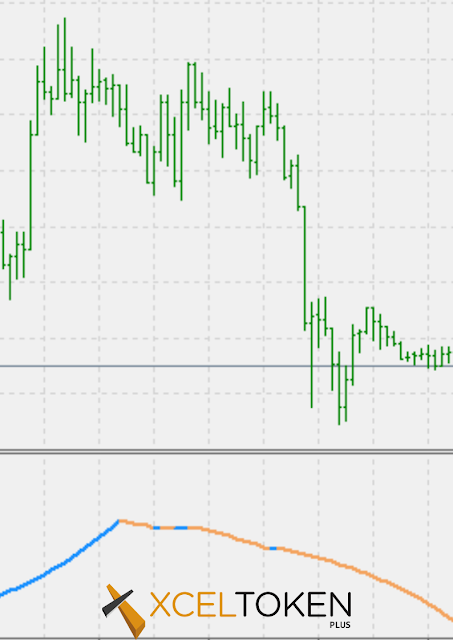
Image
This article is a continuation of the introduction blog written on the Stochastic RSI . The StochRSI was developed by Tushar S. Chande and Stanley Kroll and comprehensive in their book "The New Technical Trader," first published in 1994. While technical pointers already existed to show overbought and oversold levels, the two developed StochRSI to improve sensitivity and generate a greater number of signals than traditional pointers could do. The StochRSI deems something to be oversold when the value drops below 0.20, meaning the RSI value is trading at the lower end of its predefined range, and that the short-term direction of the underlying security may be nearing a low a possible move higher. Conversely, a reading above 0.80 suggests the RSI may be reaching extreme highs and could be used to signal a pullback in the underlying security. Along with identifying overbought/oversold conditions, the StochRSI can be used to identify short-term trends by looking...

What Is the Stochastic RSI?

Image
The Stochastic RSI (StochRSI) is an indicator used in technical analysis that varies between zero and one (or zero and 100 on some charting platforms) and is shaped by applying the Stochastic oscillator formula to a set of relative strength index (RSI) values rather than to typical price data. Using RSI values within the Stochastic formula gives traders an idea of whether the current RSI value is overbought or oversold. To put it simply, Stochastics and RSI are based off of price, Stochastic RSI originates its values from the Relative Strength Index (RSI); it is essentially the Stochastic indicator applied to the RSI indicator. The StochRSI oscillator was developed to take benefit of both motion indicators in order to create a more delicate indicator that is tuned to a specific security's past performance rather than a comprehensive analysis of price change. The Formulas For the Stochastic RSI (StochRSI) are: StochRSI = RSI − min [ RSI ] ​  ...